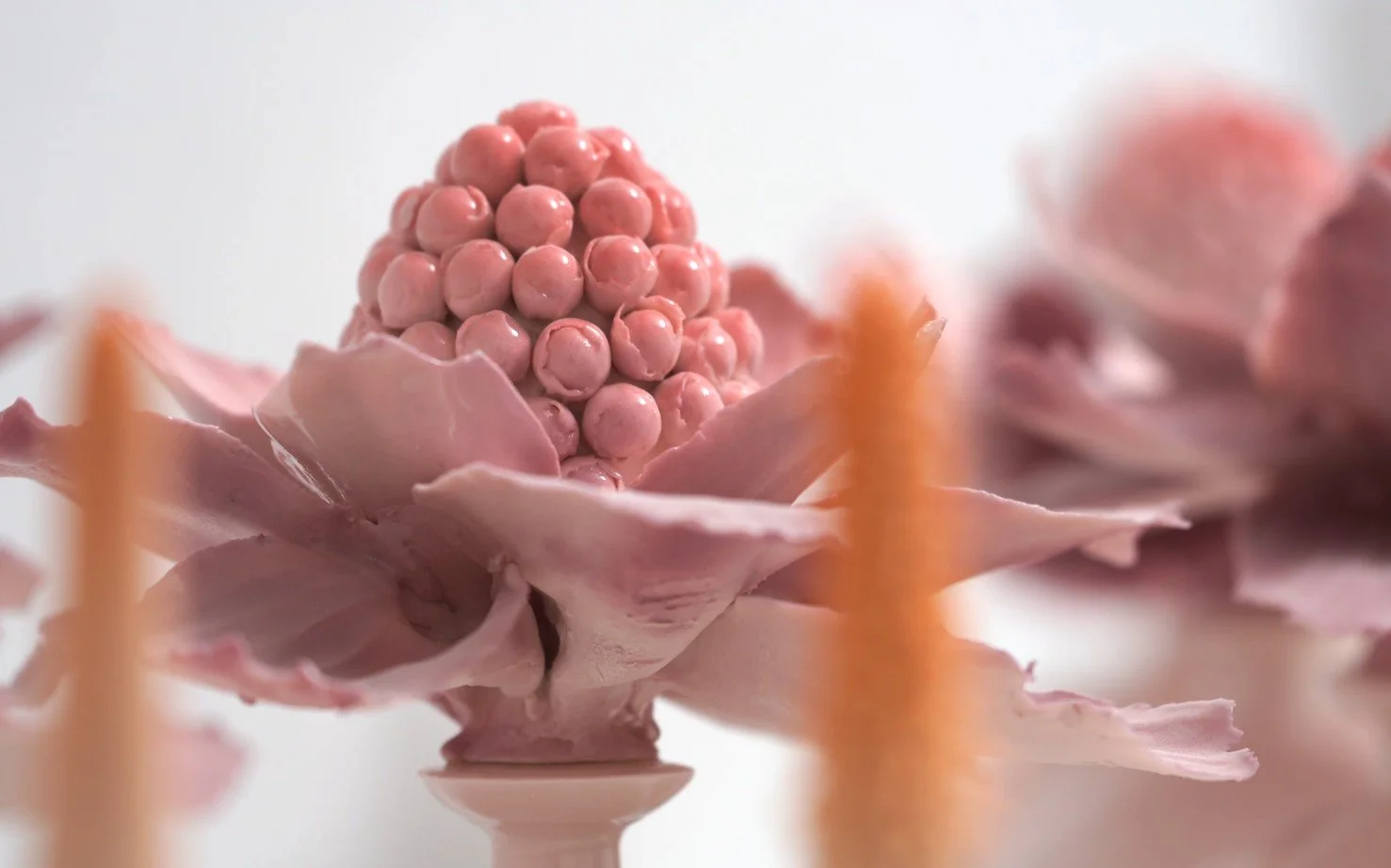
The Scent of Time
The Scent of Time is inspired by my experience of tending a small garden beside my studio in Korea. I cared for the plants by adjusting their conditions: softening direct sunlight, watering them regularly, giving them nutrients, and protecting them from wind and cold with plastic covers and straw during autumn and winter. However, despite this care, the plants continued to wither and disappear beyond my control.
As I watched this process, I came to mourn my garden. Through this mourning, I began to feel more deeply the energy of what was still alive: the breathing presence of flowers, the movement of leaves, the quiet sounds of nature, and the living atmosphere of the garden. Being with these sensations brought me a sense of healing. My gaze gradually shifted from trying to protect the plants to quietly accompanying them in their own time.
Through this experience, I became aware of the delicate moments held within the passage of time. I wanted to bring these moments of healing into everyday spaces, allowing the sensations I felt in the garden to remain close and to spread softly, like a subtle scent.
The title The Scent of Time is inspired by Byung-Chul Han’s book of the same name, in which he reflects on an accelerated modern society shaped by endless streams of information, and the loss of a deeper sense of time, attention and personal experience. In response, my work seeks to recall the quiet sensations of the garden and translate them into ceramic forms, allowing moments of calm, care and healing to linger in daily life.
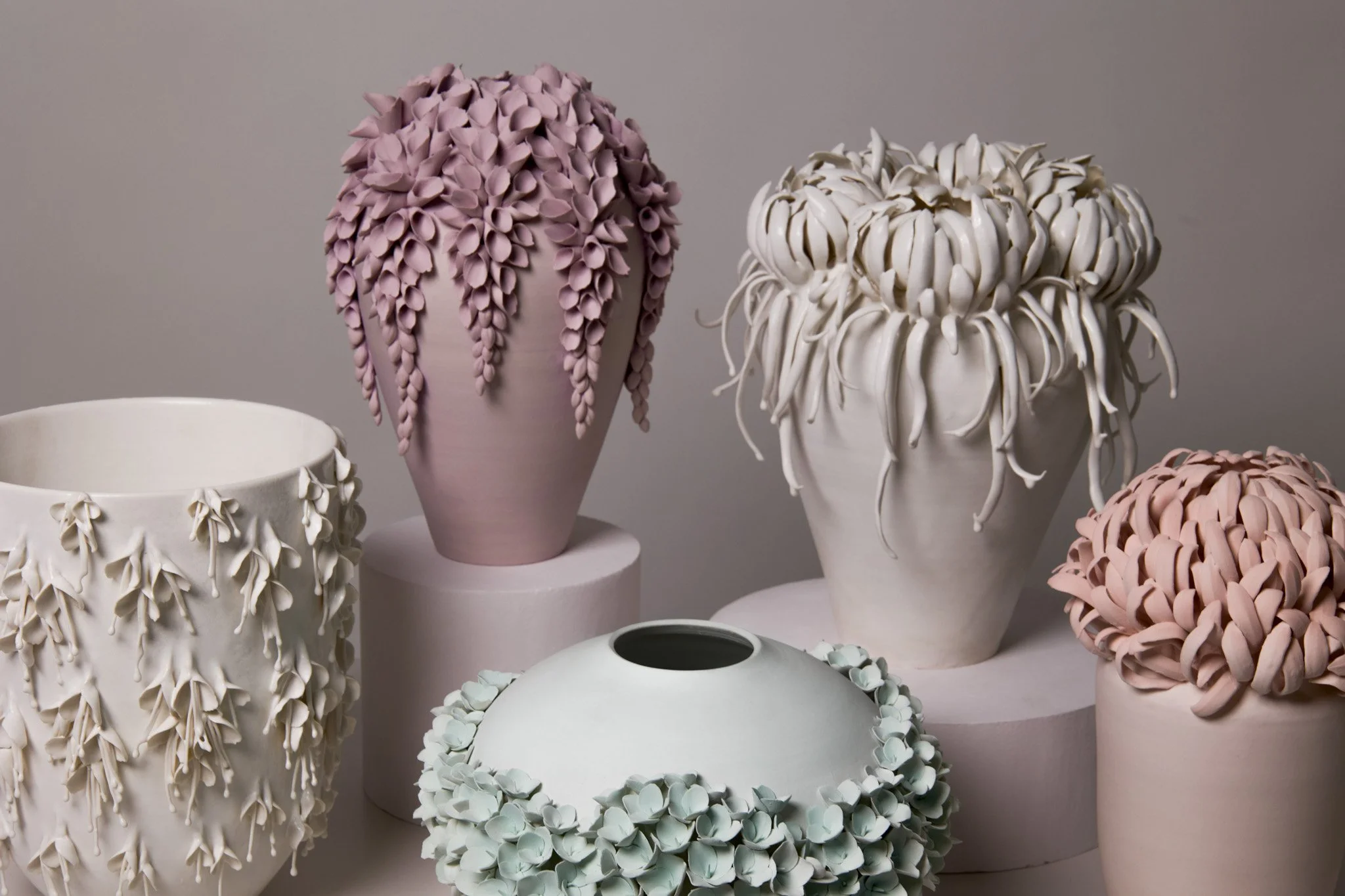
Vulnerability: On Relationship
Vulnerability: On Relationship began with the paradoxical qualities I observed in flowers while tending annual plants. Their petals were extremely thin and delicate, yet they opened firmly and rose upwards, withstanding the wind. Within their brief period of flowering, I came to see vulnerability and strength not as opposing qualities, but as conditions that coexist within a living form.
In this work, I wanted the delicate vitality of flowers that bloom only briefly before disappearing, together with the emotions I experienced while being close to them, to endure for longer. The title On Relationship refers to a shift away from an attitude of protecting and controlling the plants towards a relationship grounded in observing and accepting their transformation and disappearance.
Translating these sensations into porcelain was technically demanding. The thin petals and stamen-like structures easily sagged, bent and collapsed during drying and firing. To address this, I began developing my own clay body.
Through repeated testing, I adjusted the clay composition and particle balance while experimenting with thickness, shrinkage, joining methods and firing conditions. This process led to the development of a high-strength porcelain body capable of maintaining thin structures without sagging at firing temperatures above 1260°C. The clay body became more than a technical solution; it was central to sustaining the delicacy and tension of the floral forms in material form.
Throughout the making process, clay continually resisted and redirected my intentions through shrinkage, distortion and collapse. By responding to these behaviours through adjustments to the clay body, thickness, joining methods and firing process, making became a dialogue with the material rather than an act of imposing control. The finished forms preserve the memory of flowers that existed only briefly, while carrying traces of the testing, failure and negotiation through which vulnerability became a way of forming relationships with material and change.
Includes a short film
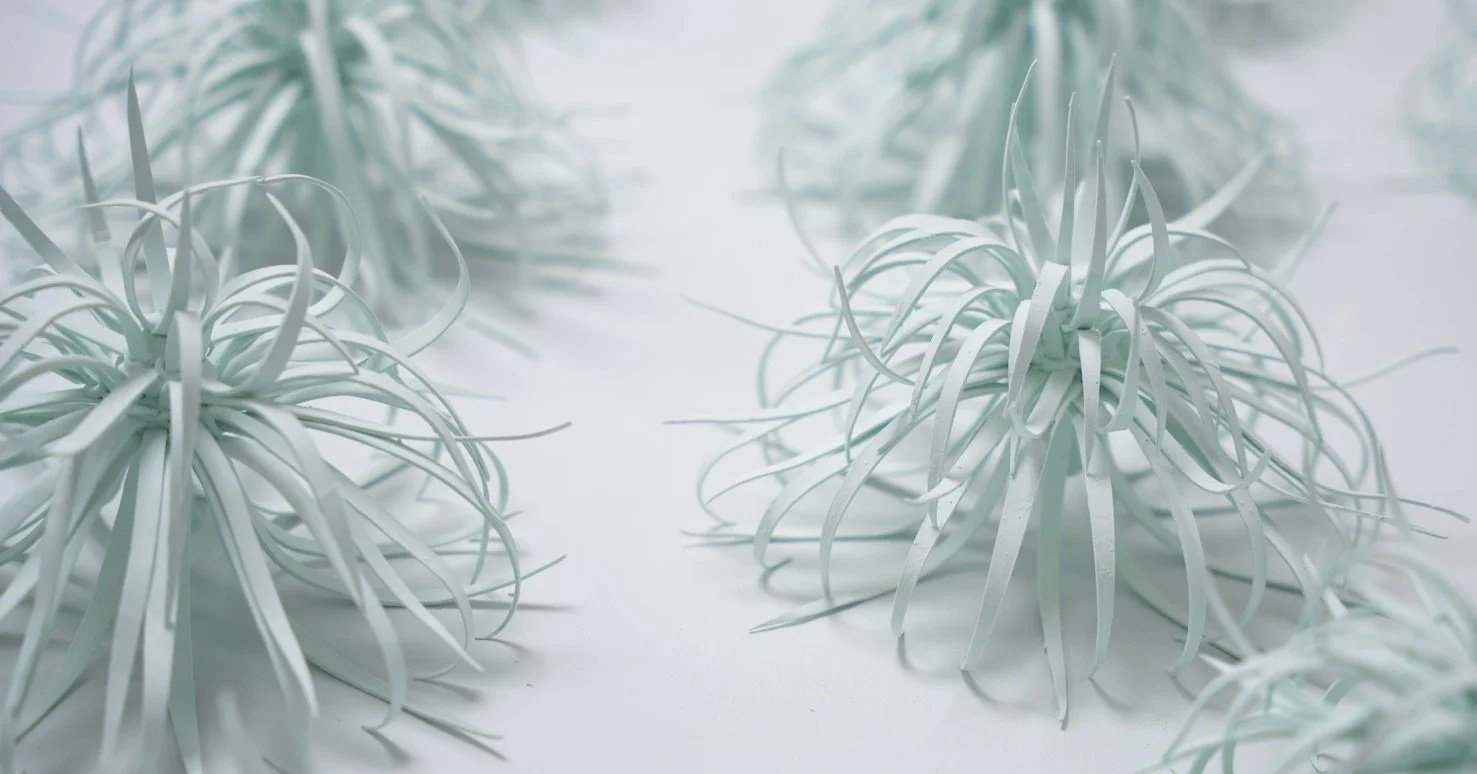
Vulnerability: Compulsion
Vulnerability: Compulsion developed from the anxiety I experienced while tending a small garden beside my studio. As I watched plants weaken, wither and disappear despite my care, the desire to protect them became increasingly urgent. The more I tried to prevent change and loss, the more this impulse intensified into a form of compulsion.
Judith Butler’s discussion of vulnerability and interdependence in Precarious Life provided a theoretical context for understanding vulnerability not as an individual weakness, but as a shared condition of relational life. This perspective prompted me to reconsider my desire to preserve the plants indefinitely, and the fear that arose from being unable to do so.
I began closely observing and reconstructing their fragile structures through repeated ceramic elements. The dense, interdependent forms reflect both the impulse to protect and the tension produced by excessive control. Each component supports another, yet the overall structure remains close to instability.
Through making, I gradually shifted from resisting vulnerability to recognising it as an unavoidable condition of living. The work became a way of confronting my own anxiety and examining how the desire to protect can become a form of control.
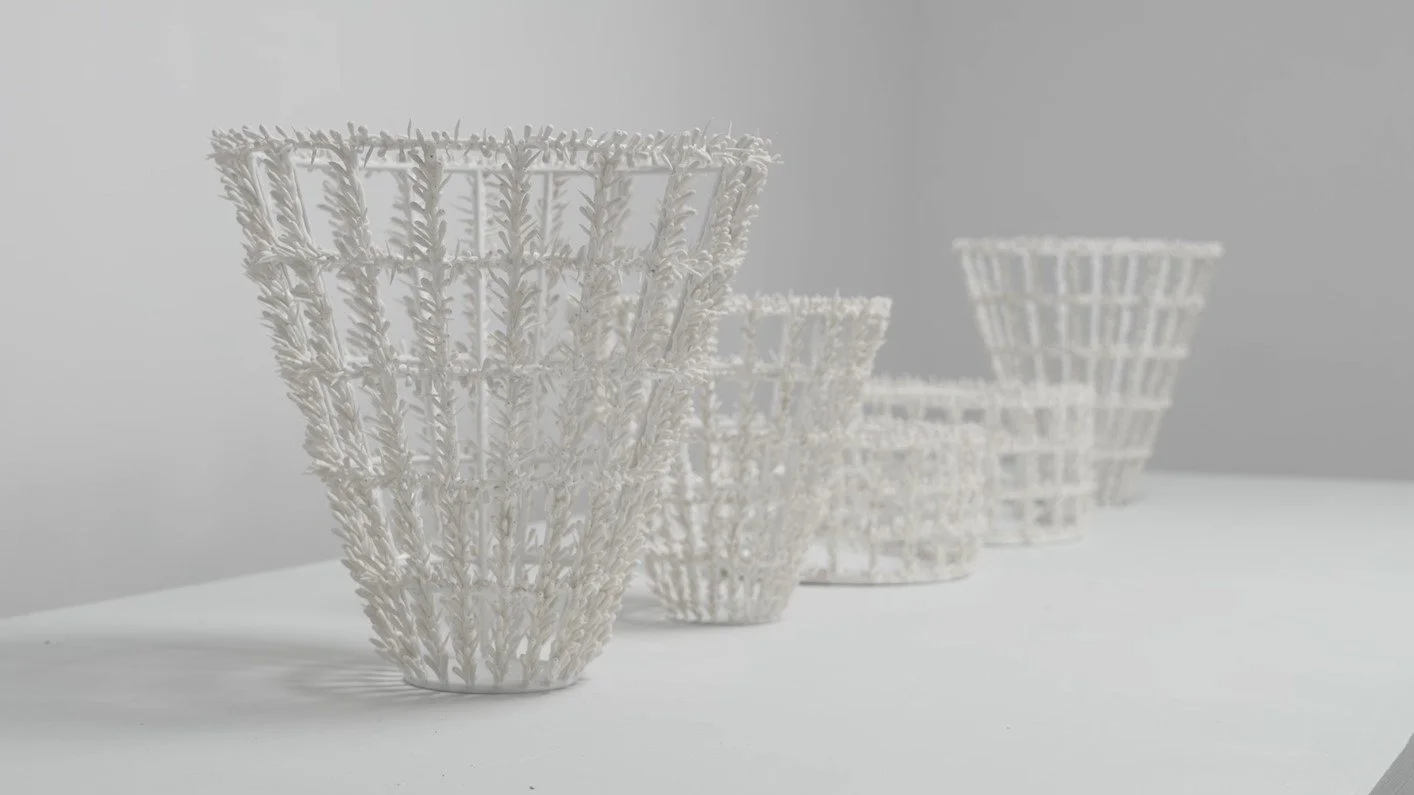
Paradise on Earth
Paradise on Earth developed from my experience of visiting Gardens by the Bay in Singapore. Within this vast and carefully controlled environment, plants remained in full bloom regardless of the natural changes outside. Surrounded by a landscape that felt both artificial and intensely alive, I was drawn to the overwhelming energy of flowers at their fullest moment. Their colour, scale and density created an almost theatrical scene in which the beauty of nature appeared at its most heightened.
What moved me was not only the visual abundance of the flowers, but also the energy revealed at the peak of their life. A flower in full bloom holds an intense vitality, yet that moment can only emerge through a long and largely unseen period of growth. Seeds germinate slowly, stems and leaves develop, and considerable time is needed before flowering can occur.
This work reflects on the moment when beauty and vitality reach their peak. By translating a brief moment of flowering into ceramic, I wanted to hold and extend a scene that cannot last in nature. Repeatedly making countless petals, pistils and stamens became a way of carrying both the intensity of that climax and the long duration leading up to it into the form.
Through this process, making became meditative. Repetition moved beyond physical labour and became a way of building vitality by hand. The finished work seeks to hold not only the splendour of flowers in full bloom, but also the sense of joy, energy and devotion embedded in the act of making.